Start with what you are allowed to change
A rental kitchen can feel oddly impersonal. The cupboards may be practical but anonymous, the lighting may be harsh, and the available storage may reflect someone else’s habits. You can still make the room feel like yours without treating it as a renovation project. The useful question is not “How can I replace this kitchen?” but “Which small, reversible decisions would make daily life feel more considered?”
Begin with your tenancy agreement and any written guidance from your landlord or agent. Rules about painting, drilling, adhesive hooks, replacing fittings and adding appliances vary. Ask for permission in writing when a change could affect a wall, cupboard door, worktop, plumbing or electrical installation. Keep a record of the original condition and store anything you remove safely. A good rental update should be easy to explain when you move out.
Notice the room before buying anything. Stand at the entrance and look at the largest surfaces first: cabinet fronts, floor, worktop, wall and window. Then notice the things you touch every day: handles, taps, bin, chopping area, kettle and the light switch. Personality often arrives through these repeated details rather than through a large decorative statement.
Choose one visual direction
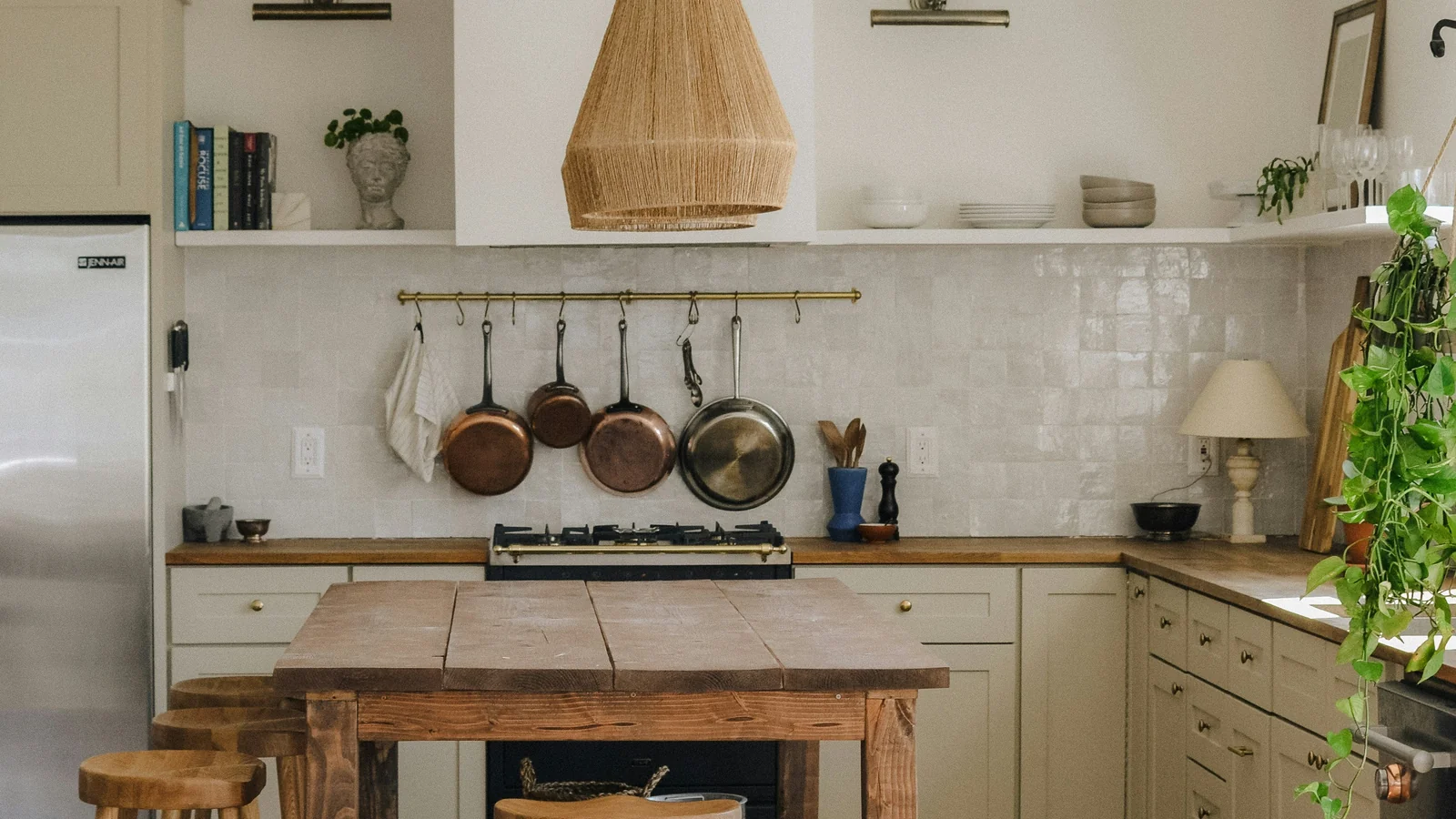
The quickest way to make a rental kitchen feel intentional is to choose a small visual vocabulary. This does not need to become a strict colour scheme. Pick one base neutral already present in the room, one supporting colour and one material that you would like to repeat.
For example, a white kitchen might take a deep green accent, warm wood and brushed metal. A grey kitchen could work with pale blue, linen and dark timber. A kitchen with brown cupboards may need only cream, black and one muted red to feel more coherent. Look for colours that already appear in the room, perhaps in the floor, tiles or worktop, and use them as a starting point.
Keep the strongest colour at eye level or on movable objects. A tea towel, runner, small artwork, utensil pot or open shelf display can provide enough contrast without making the room feel busy. If the kitchen is narrow, repeat the colour in two or three places rather than scattering many unrelated shades.
Materials do a similar job. A wooden board, woven basket and linen cloth create a softer reading than a collection of glossy plastic containers. You do not need to buy everything in one finish. Choose materials that age well and can serve a purpose after the room changes.
Make the worktop earn its space
Kitchen personality is easy to lose when every surface becomes storage. Start by deciding what deserves to stay out. A kettle you use several times a day, a fruit bowl or a chopping board may be sensible. Four appliances, a stack of unopened post and a collection of rarely used utensils make the room feel accidental.
Group objects by the task they support. Keep tea and coffee together, cooking oils near the hob if it is safe to do so, and breakfast items close to the place where you prepare them. This is not only tidy; it makes the room easier to read. A small group of related objects looks more deliberate than the same objects spread across the whole worktop.
Use a tray when several things need to live together. A tray gives a visual boundary to a coffee corner or a set of cooking oils, and it can be lifted when you need more preparation space. Choose a tray with a low edge and a material that tolerates the kitchen environment. Avoid placing anything unstable near heat, water or an edge.
If the worktop is crowded, look up before you buy another organiser. A slim, freestanding shelf can use vertical space without being fixed to the wall. A rail that sits on the worktop may hold utensils, but check that it does not interfere with food preparation or cleaning. The best storage is the kind you can reach with one hand and return without a negotiation.
Add character through movable layers
Textiles are one of the safest ways to change the mood of a rental kitchen. A washable runner can soften a hard floor, while a pair of cloths in a repeated colour can connect the kitchen to the rest of the home. Measure the route first. A runner should not catch on cupboard doors, block a dishwasher or become a slipping hazard.
Window treatments can also make a difference, but kitchens need practical fabrics. Choose something that can be washed and that does not hang near a hob. If the existing blind is functional, you may only need a small plant, a framed print on a nearby surface or a ceramic object to make the window area feel more personal.
Use artwork carefully. Kitchens have steam, splashes and changing temperatures, so a valuable original or delicate paper print may not be the right choice. A small framed photograph, a simple poster or a postcard in a wipeable frame can provide interest. Leaning art against a wall avoids drilling, but make sure it cannot slide behind a worktop or fall onto a cooking surface.
Plants can bring life into a plain kitchen if the light and temperature suit them. Keep pots away from direct heat and places where water will damage the worktop. A single healthy plant often looks better than several struggling ones. If the room is dark, a good-quality artificial stem can provide a similar visual note without pretending that every corner is suitable for growing.
Change the details you touch
Handles are visually powerful because they repeat across a kitchen. Replacing them may be possible, but ask permission first and measure the existing holes precisely. Keep the original handles, screws and a note of where each one belonged. If changing them is not allowed, clean them thoroughly and consider whether a different object nearby could provide the new accent instead.
Small freestanding pieces can create a stronger sense of ownership. A wooden stool, a narrow trolley or a small side table can add height and storage without altering the fitted kitchen. Choose something that fits the route through the room. Open doors, drawer handles and appliance doors should still work without collision.
The bin is another repeated object that can affect the room. A simple, well-sized bin with a lid may make the kitchen feel calmer than a decorative item that is too small for daily use. Keep cleaning supplies accessible but visually contained. A basket under the sink or a lidded box can reduce the impression of loose objects without hiding things so well that you forget them.
Lighting deserves attention. If you cannot change the ceiling fitting, add a plug-in lamp where it is safe and practical, or use a rechargeable lamp on a dry surface away from the sink and hob. A warmer secondary light can make the kitchen feel less clinical in the evening. Do not cover vents, overload sockets or place fabric near heat.
Make storage feel like a display
Open storage works best when it holds things you actually use. If you have permission to install a shelf, check the wall, fixings and weight carefully. A freestanding shelf may be easier in a rental, but it still needs to be stable and positioned away from doors and heat.
Treat an open shelf as a small composition. Start with the largest practical objects, such as plates or jars, then add one or two pieces with a different shape. Leave empty space. A shelf packed from end to end will make a small kitchen feel smaller and will collect more dust and grease.
Use containers only when they improve a real problem. Decanting every ingredient can look neat, but it takes time, creates labelling work and may make dates harder to read. Use matching jars for one category that is genuinely easier to reach this way, such as tea, coffee or dry breakfast ingredients. Keep original labels or expiry information available where it matters.
If you have limited cupboards, use the inside of a door only with removable storage that will not strain the hinges. Check clearance before attaching anything. A door organiser that hits a shelf or prevents the door from closing is not an improvement, even if it looks useful in a product photograph.
Keep maintenance part of the design
Personality cannot compensate for a kitchen that is difficult to clean. Choose washable textiles, wipeable surfaces and objects that can be moved without dismantling the room. Leave a clear area around the hob, sink and food preparation zone. If a decorative item makes cleaning awkward, it will eventually become a source of irritation.
Create a short weekly reset. Put away objects that have migrated, wipe the worktop, empty the food waste and check the fridge door and handles. Notice which items are always in the way. The answer may be a better location rather than another storage product.
Be cautious with adhesive products. Follow the manufacturer’s weight and surface guidance, and test in an inconspicuous place if the landlord permits their use. Painted walls, old plaster, tiles and laminate can all react differently. Never assume that a product described as removable will leave every surface untouched.
Keep a small rental file with photos, permission emails, paint names if you used any, and a list of original fittings. This makes the room easier to restore and reduces stress at the end of the tenancy.
Build the room around your real routine
The most convincing personality in a kitchen comes from a clear relationship between the space and the person using it. If you cook often, give the preparation area room and keep tools close. If you mostly make breakfast and tea, make that ritual easy and attractive. If the kitchen doubles as a place to work or talk, protect one clear surface and improve the light there.
Try the room for a week before making another purchase. Note the small moments that feel awkward: reaching across the hob, opening a cupboard blocked by a bin, searching for a cloth or carrying a heavy appliance from a high shelf. Solve those problems first. Practical improvements will make the decorative choices feel more believable.
Your rental kitchen does not need a dramatic makeover. A considered palette, a few movable layers, useful storage and a clear maintenance habit can make an ordinary room feel more like home while leaving the original kitchen intact. The best changes are the ones that support your life today and can travel with you when you move.